Optical Bonding

Optical Bonding

Optical bonding is one of the single most effective display enhancement technologies available — delivering simultaneous improvements in sunlight readability, structural durability, and environmental protection through a single, well-controlled manufacturing process. For any display application involving direct sunlight, significant vibration, moisture exposure, or demanding physical environments, optical bonding is not just an enhancement — it’s a fundamental performance requirement.
optical boding img

What is Optical Bonding?

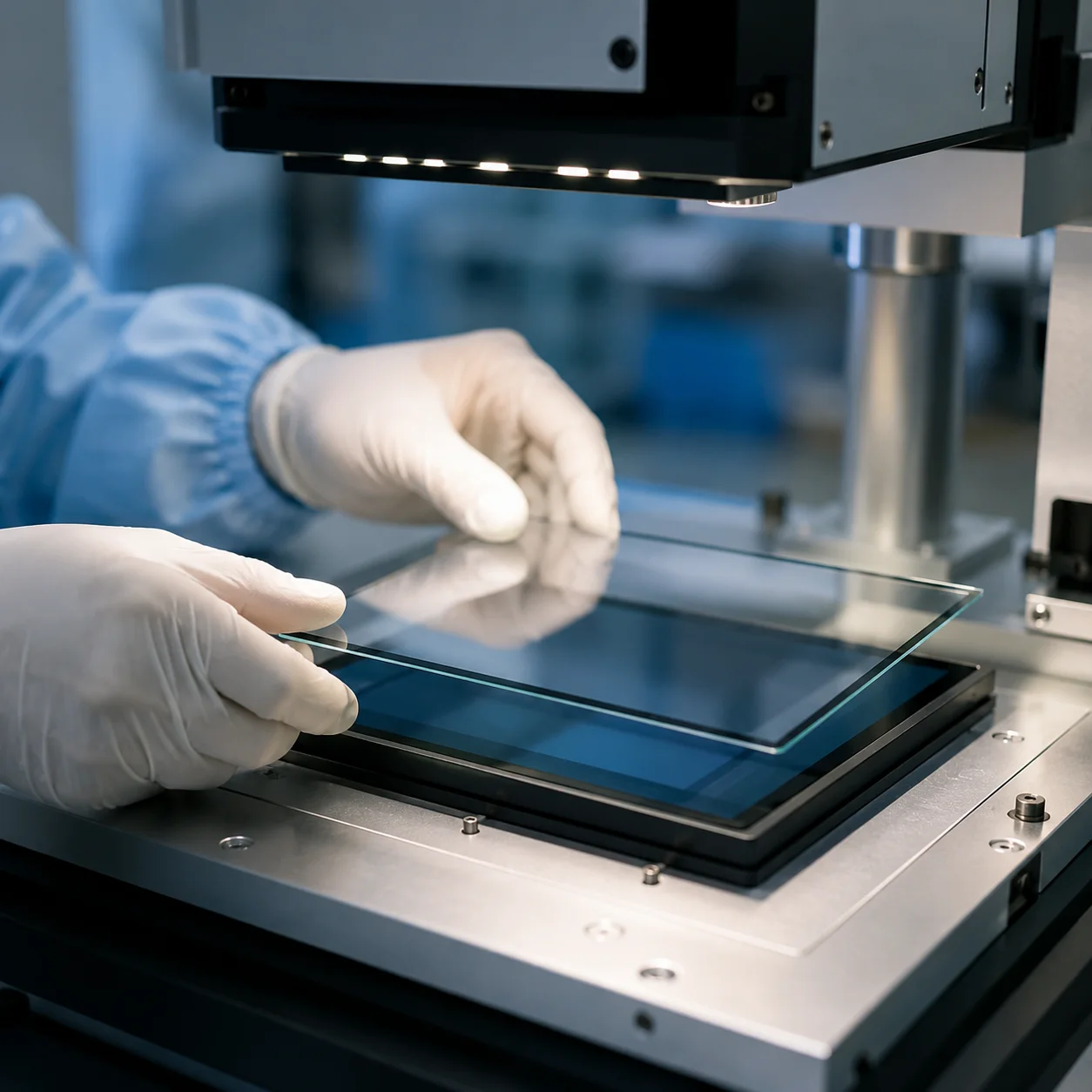
Optical bonding is the process of laminating a protective cover glass or touch panel directly onto the LCD using an optically clear adhesive (OCA for dry bonding, OCR for wet/liquid bonding). The adhesive is precisely matched to the refractive index of the glass, eliminating the optical interface that the air gap creates between the LCD face and the inner surface of the cover glass. The result is a single unified optical assembly — thinner, stronger, clearer, and more resistant to environmental attack than any unbonded display configuration.

Montek offers both dry bonding (gel OCA adhesive) and wet bonding (liquid OCR adhesive) processes. Both are executed in controlled cleanroom environments with ESD-safe handling, precision curing, and 100% quality inspection of every bonded unit before shipment. No bubbles. No delamination. No optical distortion.

Why Optical Bonding Makes a Critical Difference

Dramatically Improved Sunlight Readability

Sunlight Readability Improvement

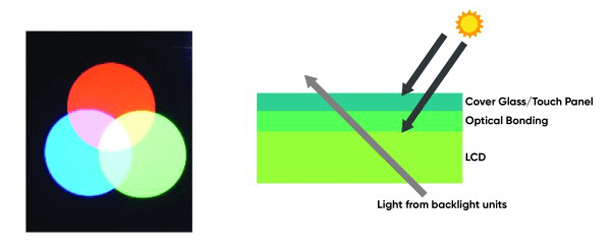
A standard unbonded display has two problematic reflective interfaces — the front surface of the LCD panel and the inner surface of the cover glass. Both wash out the displayed image in bright ambient light. Optical bonding eliminates both simultaneously, improving effective contrast ratio by 5 to 10 times over an unbonded panel at the same backlight brightness. Content stays sharp and readable in direct sunlight without increasing power consumption.

Card 2 10

Shock & Vibration Resistant

Optical bonding transforms the display from two separate components into a single mechanically unified structure — significantly stronger against impact, shock, and sustained vibration than any unbonded assembly. The bonded structure eliminates the panel flex and cover glass separation that cause premature display failure in marine, vehicle, and heavy industrial environments.

Dust and Moisture

Anti-Moisture & Dust Sealed

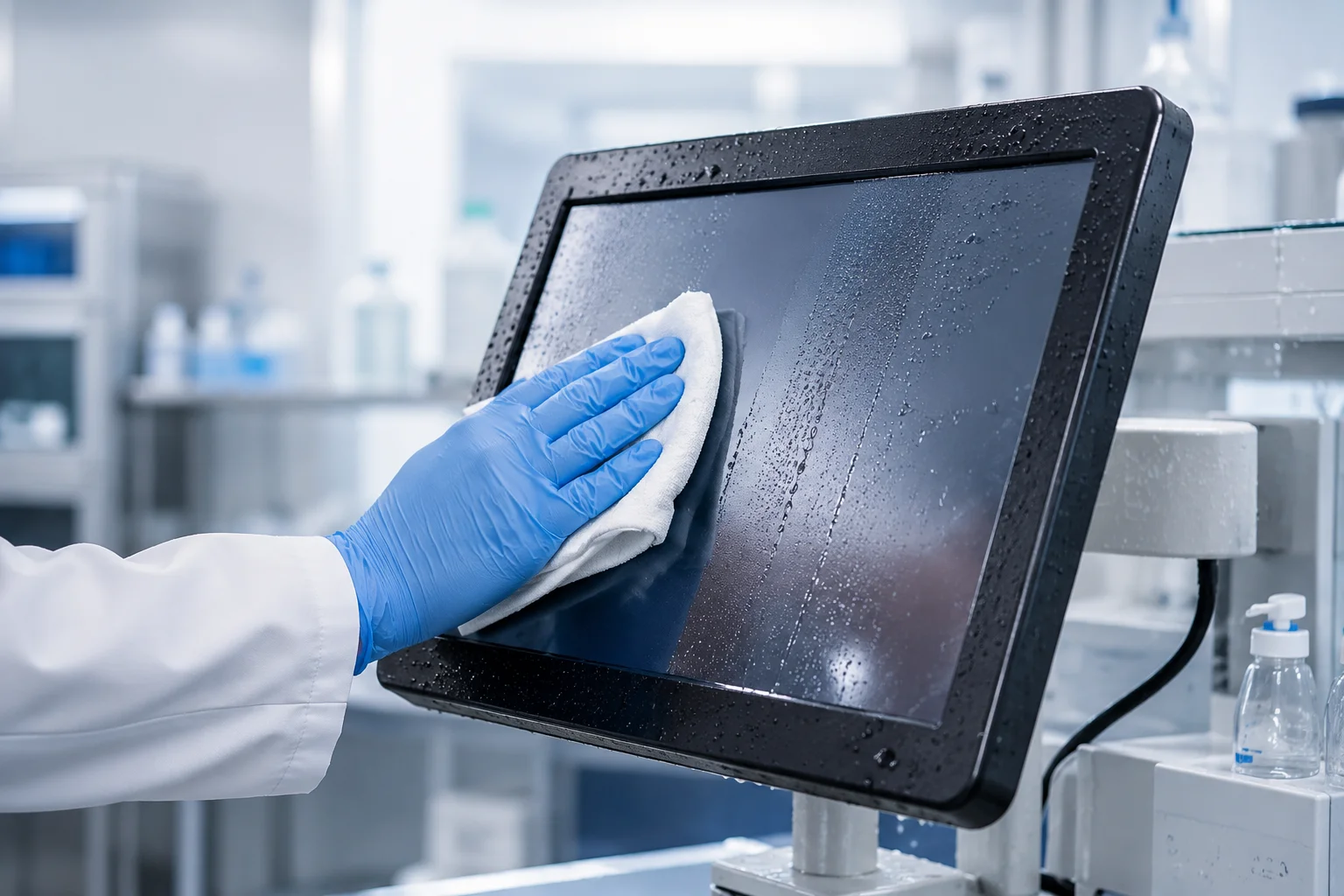
The air gap in an unbonded display is an open infiltration pathway for dust, moisture, condensation, and in clinical settings, biological contaminants. Optical bonding seals this gap completely — blocking moisture ingress at temperature transitions, preventing internal dust accumulation, and in medical applications, creating a fully hygienic front surface that withstands repeated disinfection without risk of liquid infiltration.

Vandal Proof Reinforcement

Vandal-Proof Reinforcement

For public-facing and unsupervised installations, the bonded assembly delivers substantially higher resistance to deliberate physical impact than any unbonded display configuration. The unified glass-to-panel structure absorbs and distributes impact force across the entire assembly rather than concentrating it at the cover glass — making it significantly harder to crack, shatter, or delaminate through intentional abuse.

Choosing the Right Optical Bonding Partner

Choosing the Right Optical Bonding Partner Optical bonding looks straightforward on paper — butthe difference between a flawless bond and a field failure comes down entirely to material quality, process discipline, and operator experience. We’ve seen what happens when vendors cut corners: bubbles trapped in the adhesive layer, delamination under thermal cycling, optical distortion from inconsistent curing, and suppliers who point fingers at the display panel rather than acknowledging their own process failures. And when a bond fails, the damage rarely stops at the adhesive layer — both the LCD panel and the Touch glass are at risk of being destroyed in the process, turning a bonding defect into a total assembly write-off. Bad bonding doesn’t just cost you the rework — it costs you the entire display investment, plus production delays, customer commitments, and the time to source replacement components. Montek uses Japanese brand adhesive materials — proven, stable, and qualified across demanding industrial applications — applied by operators with over 20 years of hands-on bonding experience and a track record that includes Panasonic-level production programs.

This isn’t the low-cost option in the market. It’s the right one and the one you can trust. Every bonded display we ship goes through controlled curing, systematic quality inspection, and performance validation before it leaves our facility. We stand behind the bond — not just the panel.
Right optical bonding partner
Applications Where Optical Bonding Is Essential
Key Benefits Summary

Considering optical bonding for your display application? Contact Montek to discuss your specifications, ask technical questions, and get a project quote.